

Why Does My Neck Hurt? Common Causes and When to Seek Help
Most people have neck pain at some point, sometimes after something as simple as waking up from a night’s sleep. Many people are also familiar with what’s commonly called “tech neck”, a specific type of neck pain that follows long days of looking at a computer screen. Neck pain can accumulate over time or occur suddenly. It may be something you tweak during a weekend of yard work or some other mundane activity.
Fortunately, neck pain often improves with rest and basic care. Other times it can be a reason for a medical evaluation. In any case, understanding the likely cause of the pain is an important step in finding relief.
Why Neck Pain Happens
Your neck is extremely useful and extremely complex. It is highly mobile to support several types of movement while also supporting the weight of your head. Inside is a complex network of muscles, joints, ligaments, nerves, and blood vessels all working together to provide one of your body’s most useful and versatile structures.
The seven vertebrae that begin at the base of your neck (known as the cervical spine), along with muscles and ligaments that support them, work hard to provide the support and mobility we need from our necks. Nerves passing through this region carry important information between our brain and muscles. Between these vertebrae are flexible intervertebral disks that provide shock absorption during physical activity1.
With so many structures working together, there are many different things that can go wrong. There are also several different problems that produce similar symptoms, which can make an accurate diagnosis more difficult.
Some Common Causes of Neck Pain
Neck pain often results from issues in the soft tissues of your muscles, ligaments, or nerves. In rare cases it is caused by infections or tumors. Sometimes it is referred pain that actually has its source in your upper back or shoulders.
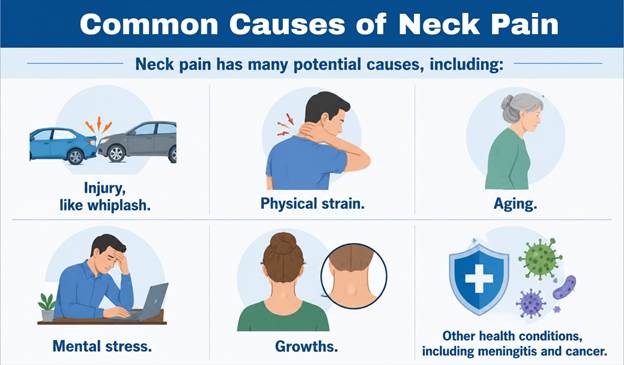
Some of the most common causes of neck pain include2:
-
Aging:
Natural wear and tear can cause parts of your cervical spine to deteriorate over time. Also, degenerative conditions like osteoarthritis or spinal stenosis can cause pain in this area.
-
Injury:
Physical trauma can cause damage to muscles, ligaments, disks, or nerves in your neck. Whiplash from car accidents is a common example.
-
Physical strain:
Pain from overuse or repetitive stress is also common. This can be exacerbated by things like excess weight, weak muscles, or poor posture.
-
Mental stress:
Many people don’t realize that mental stress can cause you to tighten your neck muscles, which can lead to pain and stiffness.
-
Growths:
Tumors, cysts, and bone spurs may create nerve pressure that leads to pain.
-
Other health conditions:
Many health conditions like rheumatoid arthritis, meningitis, or cancer can cause neck pain.
These are some of the most common factors associated with neck pain. Often, neck pain can contribute to pain experienced in other areas of the body, like headaches or stiffness in your upper back. It can also lead to mobility problems with turning or tilting your head, making many basic daily activities more difficult.
Your Symptoms Can Offer Clues
While a true diagnosis will require a professional evaluation, the pain itself can often offer clues to the underlying cause. Sometimes, the timing of the pain can provide valuable information. For instance, if you go to bed feeling fine and then wake up with a stiff neck, there’s a good chance this is a strain caused by an awkward sleeping position. If you have a car accident and your neck hurts immediately afterward, there’s a good chance it was caused by physical trauma.
Other times, the type of pain can provide important clues. If your pain is radiating into other body parts like your arm, or if the pain is associated with tingling or numbness, there’s a possibility of nerve involvement. If the pain only occurs when you turn your head a particular way, it may suggest muscle pain or joint irritation.
It’s also important to keep in mind that there are some situations where your neck pain indicates you should seek immediate medical care. Emergency care is recommended if your neck pain is associated with3:
- Traumatic injury: Neck pain following a car crash, diving accident, or fall should prompt a trip to an emergency room.
- Muscle weakness: Neck pain accompanied by weakness in an arm or leg may indicate a more serious condition.
- Fever: Severe neck pain associated with a high fever may indicate an infection like meningitis or other serious medical condition.
Other situations may indicate you need non-emergency medical attention. If the pain worsens over time, doesn’t improve after weeks of self-care, radiates down your arms or back, or generally prevents you from doing the things you normally would, schedule an appointment with your physician or physical therapist.
When Self-Care Isn’t Working
While most neck pain resolves itself over time with proper care at home, as stated above there are situations where you should seek out medical attention. Neck pain that isn’t going away or is causing problems in your daily life should be evaluated by a professional.
This is where a good physical therapist can play a vital role. A physical therapy evaluation will help to identify the root cause of the pain rather than just treating the symptoms. An evaluation may assess your movement and/or posture. A physical therapist will work to treat your pain with the intent of helping you avoid surgery or unnecessary medications.
Once the underlying cause of the pain is identified, your physical therapist can develop a personalized treatment plan tailored to your needs and abilities. It may include manual therapy and exercise, among several other treatment options. Your treatment plan is also likely to provide more than pain relief. It can help you build strength, mobility, and flexibility that will help you avoid more pain in the future. A physical therapist is also a great source of education and advice to help you live your best life.
If you or a loved one is experiencing neck pain that interferes with your ability to live the life you want, don’t hesitate to reach out to a physical therapist today to schedule an evaluation.
Sources
- “Neck Pain - OrthoInfo - American Academy of Orthopaedic Surgeons.” Orthoinfo.Org, 2026, https://www.orthoinfo.org/diseases--conditions/neck-pain/. Accessed 28 July 2026.
- Cleveland Clinic. “Neck Pain: 6 Common Causes and Treatments.” Cleveland Clinic, 10 Sept. 2019, https://my.clevelandclinic.org/health/diseases/21179-neck-pain. Accessed 28 July 2026.
- Mayo Clinic Staff. “Neck Pain: Symptom When to See a Doctor.” Mayo Clinic, 22 Oct. 2024, https://www.mayoclinic.org/symptoms/neck-pain/basics/when-to-see-doctor/sym-20050882. Accessed 28 July 2026.