

Can Physical Therapy Help with Sciatica? What You Should Know
Millions of Americans feel the pain of sciatica every year. Though not everyone experiences it the same way, it typically feels like pain that begins around the lower back or buttock area and travels into the leg. The sciatic nerve is the largest and longest nerve in your body, and when it (or one of the spinal nerve roots that contributes to it) gets irritated or compressed, this is what we call sciatica, and it’s no fun.
Symptoms are typically felt on one side of the body, though in rare cases both sciatic nerves can be affected and symptoms will appear on both sides. These symptoms can include shooting or burning pain, tingling or a “pins and needles” sensation, numbness, or muscle weakness1.
Sciatica symptoms can extend as far as the nerve itself, from the lower back, through the buttock and thigh, and sometimes all the way into the calf or foot.
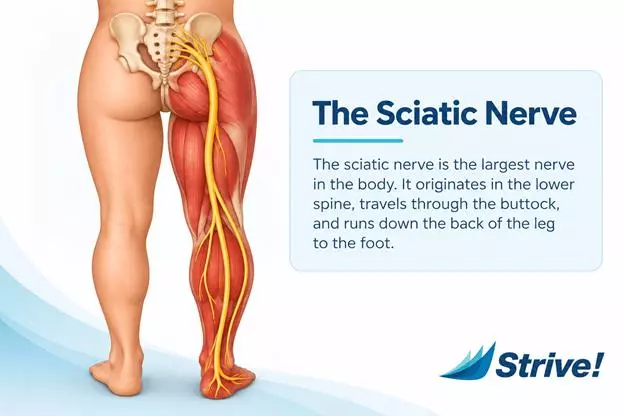
Sciatica can have different causes, including bulging discs, spinal stenosis, degenerative changes, and more, and two people with sciatica may have very different symptoms. That’s one reason treatment shouldn’t be identical from one person to the next. It’s also a reason that physical therapy can be such an effective tool in combating sciatica. A physical therapist can evaluate your symptoms and movement to help identify the contributing factors and develop a personalized treatment plan tailored specifically to you and your unique situation.
How Physical Therapy Can Address Different Sciatica Symptoms
Sciatica presents itself in different ways to different people, and physical therapists have a wide range of tools and techniques at their disposal to address the underlying causes of these symptoms and get patients back to moving and feeling better. For many people with sciatica, conservative treatments such as physical therapy may be a safe and effective alternative to more invasive treatment options.
How PT Helps with Shooting or Burning Leg Pain
One of the more common symptoms of sciatica is shooting or burning pain that travels from the lower back or buttock down the back or side of the leg. It can be intermittent or persistent, and many patients find that certain movements or positions make it worse. Back pain that is accompanied by leg pain is one of the key indications that you’re dealing with sciatica instead of another type of back pain2.
A physical therapist can evaluate your symptoms by helping identify which movements increase the symptoms and which movement reduce them, whether certain movements make the pain travel farther down the leg, and whether there are particular positions that provide relief.
In many cases, certain movements can cause the pain to centralize in the lower back. This response can help your PT determine which movements and exercises are appropriate. Then your personalized treatment plan can include the stretching, strengthening, and mobility exercises needed to reduce symptoms, improve function, and help you get back to your normal routines.
How PT Helps with Tingling and Numbness
Another common symptom associated with sciatica is a sensation of tingling or a “pins and needles” feeling. This can also be accompanied by areas of decreased sensation. These symptoms can often extend into the calf, ankle, or foot. The exact distribution of these symptoms can vary depending on which nerve root is affected.
A physical therapist can evaluate your symptoms and create a treatment plan accordingly. In some cases, tingling or numbness may actually be caused by something other than your sciatic nerve. This is why a proper diagnosis is essential.
If it is sciatica, your PT may use exercises that allow the nerve and surrounding tissue to move more comfortably rather than stretching the irritated nerve. Mobility exercises may be accompanied by advice on movement strategies or position modifications to help you outside of the clinic. Your PT will also monitor your progress and adjust your treatment plan as needed as your symptoms improve.
How PT Helps with Muscle Weakness
Sciatica isn’t exclusively a pain problem. Sometimes people will experience leg weakness. They may have difficulty climbing stairs or find that one leg seems less reliable than the other. When the affected nerve root also influences muscles in the leg or foot, irritation or compression of that nerve root can interfere with normal signal transmission, which can contribute to muscle weakness3.
This is an area where a physical therapist can play a vital role. Your PT can assess your strength throughout your trunk/core, hips, thighs, and lower legs to identify deficits. This can help to pinpoint the precise cause of the weakness. Again, it may not be nerve-related at all in some cases.
If appropriate, your PT can then develop a progressive strength training program to target the specific deficits that were identified, as well as surrounding and supporting muscles.
How PT Helps with Stiffness and Limited Movement
Another common consequence of sciatica is that people begin avoiding movement because they’re worried about triggering symptoms. Pain can cause people to guard certain movements or move differently. This limited movement can contribute to hip stiffness and reduced spinal mobility, ultimately leading to more discomfort and possible pain.
It may seem counter-intuitive, but rest is not always the best treatment for sciatica symptoms. In fact, stretching and light activity can sometimes do more to relieve pressure on the nerve4.
A physical therapist is a fantastic resource for helping to identify the correct type and amount of movement for your particular situation. Increasing flexibility and mobility can help reduce pain and make your body more functional and effective in general.
When Sciatica Symptoms Need Medical Attention
While most sciatica isn’t a medical emergency, you should be aware that certain symptoms warrant prompt medical attention. For instance:
- Muscle weakness that is severe or rapidly worsening
- Loss of bladder or bowel control
- Numbness around the saddle/groin area
- Symptoms affecting both legs, especially if severe or progressive
Any of these conditions may indicate a more serious situation and should make a medical evaluation or emergency room visit a high priority. In any case, if your sciatica symptoms persist or worsen, getting a medical evaluation is recommended5.
The Important Role of Physical Therapy
Physical therapy can help many sciatica sufferers manage their symptoms and return comfortably to their usual daily activities. Because sciatica can have different causes and affect people in different ways, there is no one-size-fits-all solution. A physical therapist can evaluate your symptoms, strength, mobility, and movement to develop a treatment plan based on your specific needs, circumstances, and abilities.
If sciatica symptoms are limiting your quality of life, reach out to a physical therapist to schedule an evaluation today. The sooner you address the problem, the sooner you can get back to the healthy, active lifestyle you want.
Sources
- “Sciatica.” NHS Inform, 15 Oct. 2024, https://www.nhsinform.scot/illnesses-and-conditions/muscle-bone-and-joints/neck-and-back-problems-and-conditions/sciatica/.
- “Sciatica.” Hospital for Special Surgery, 3 Jan. 2025, https://www.hss.edu/health-library/conditions-and-treatments/list/sciatica.
- “Radiculopathy - Mayo Clinic Orthopedics & Sports Medicine.” Mayo Clinic Orthopedics & Sports Medicine, 21 Dec. 2018, https://sportsmedicine.mayoclinic.org/condition/radiculopathy/.
- Cleveland Clinic. “Sciatica & Leg Pain | Cleveland Clinic.” Cleveland Clinic, 21 May 2023, https://my.clevelandclinic.org/health/diseases/12792-sciatica.
- Berg, Sara . “What Doctors Want Patients to Know About Sciatica.” American Medical Association, 15 Nov. 2024, https://www.ama-assn.org/public-health/prevention-wellness/what-doctors-want-patients-know-about-sciatica.